Solar wafer prices increased sharply across all major formats in the latest weekly market update released by the Silicon Industry Branch on August 20, 2026.
The average transaction prices for N-type monocrystalline wafers were:
N-type G10L wafer (182 × 183.75 mm, 130 μm): approximately $0.165 per piece, up 40.00% week over week.
N-type G12R wafer (182 × 210 mm, 130 μm): approximately $0.168 per piece, up 26.67% week over week.
N-type G12 wafer (210 × 210 mm, 130 μm): approximately $0.180 per piece, up 10.91% week over week.
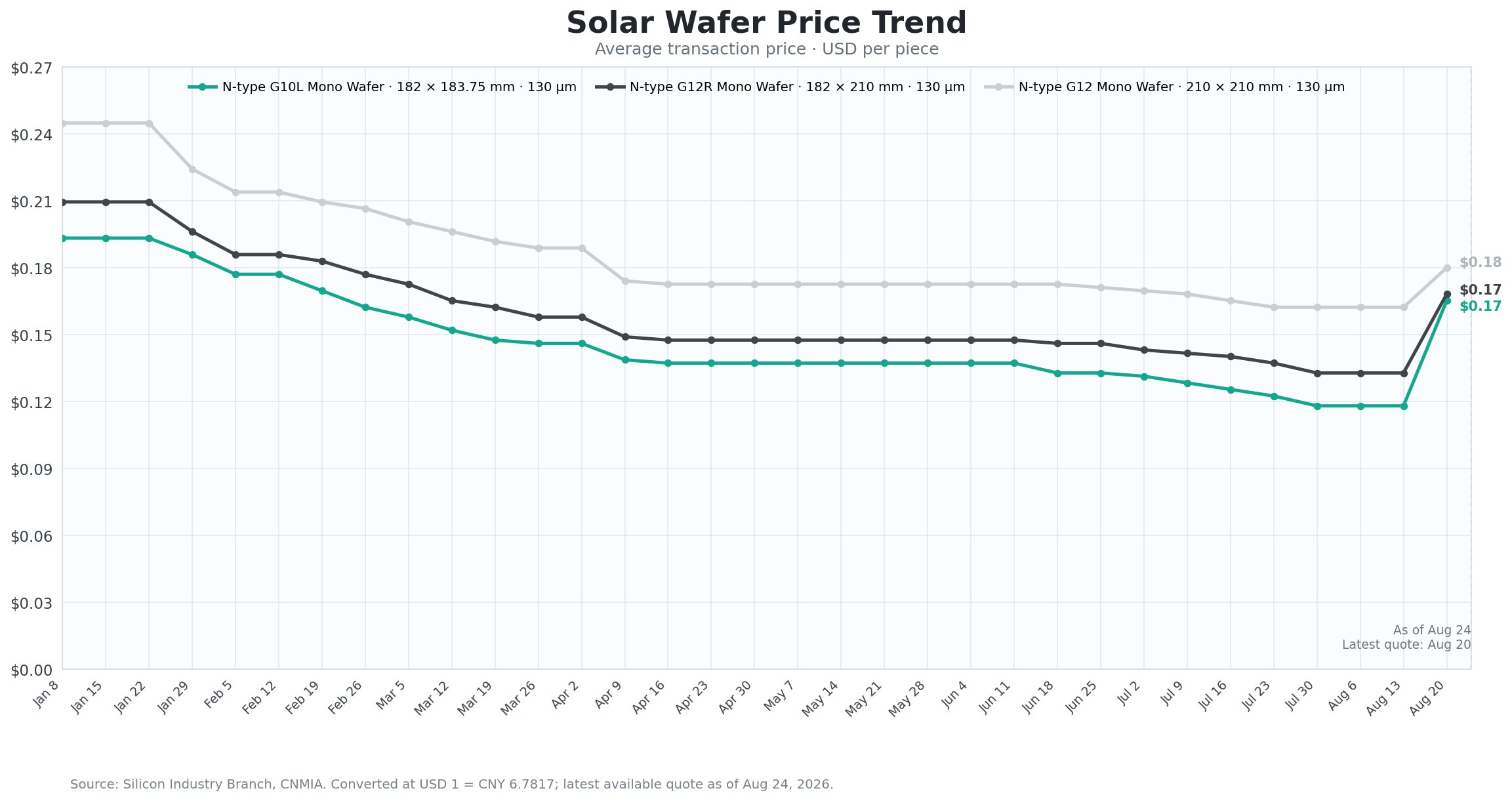
Among the three formats, G10L wafers recorded the strongest increase.
Solar Cell and Module Prices Also Increase
The price increase has extended further down the solar PV supply chain.
Mainstream solar cell prices rose to approximately $0.049–$0.052/W, representing a 23.64% weekly increase.
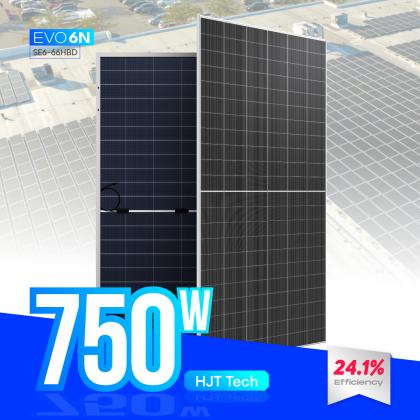
Mainstream solar module prices reached approximately $0.102–$0.105/W, up 1.45% from the previous week.
The smaller increase in module prices suggests that downstream manufacturers may still face resistance when passing higher material and cell costs on to project developers, distributors and EPC contractors.
What Is Driving the Solar Wafer Price Increase?
According to the Silicon Industry Branch, the immediate driver is a sudden increase in downstream demand.
Although domestic solar installation demand in China remains relatively stable, overseas solar cell manufacturers have accelerated wafer purchases amid concerns over potential trade risks related to the United States’ Section 232 tariff measures.
This created a concentrated purchasing wave during the available policy window.
At the same time, the arrival of India’s traditional solar installation season further strengthened export demand for Chinese solar wafers.
The combination of rising orders, short-term supply constraints and buyer expectations of further price increases has pushed wafer prices significantly higher.
Why Did G10L Wafer Prices Rise Faster?
The 182 mm G10L wafer format is primarily supplied to overseas markets, while G12R and G12 wafers are more closely linked to domestic Chinese demand.
Because the latest demand increase was largely driven by export orders, G10L wafers experienced tighter availability and a much stronger price increase than the two larger formats.
Wafer Production Rates Remain Stable
Despite the sharp rise in demand, the overall operating rate of China’s wafer industry remained broadly unchanged from the previous week:
Two leading wafer manufacturers operated at approximately 52% and 54%.
Vertically integrated manufacturers maintained operating rates of 56%–60%.
Other wafer producers operated within a wider range of 50%–78%.
Production capacity has therefore remained relatively stable. In the short term, manufacturers may find it difficult to increase wafer supply quickly enough to fully meet the sudden rise in demand.
What Does This Mean for Solar Buyers?
The latest increase does not necessarily indicate a long-term reversal of the solar market. However, it may create short-term pressure on procurement costs and delivery schedules across the PV supply chain.
Solar distributors, EPC contractors, installers and project developers should closely monitor:
Solar wafer and cell price movements
PV module quotation validity
Supplier inventory and production schedules
Section 232 tariff developments
Shipping and delivery lead times
Price adjustment clauses in supply contracts
For upcoming solar projects, confirming prices and delivery capacity earlier may help reduce exposure to further short-term market volatility.
Note: All USD prices are approximate conversions based on an exchange rate of USD 1 = CNY 6.7817. Actual export quotations may vary depending on product specifications, order volume, payment terms and delivery conditions.



 دعم شبكة IPv6

 English
 français
 Deutsch
 italiano
 español
 português
 日本語
日本語 Polski
 ไทย
ไทย